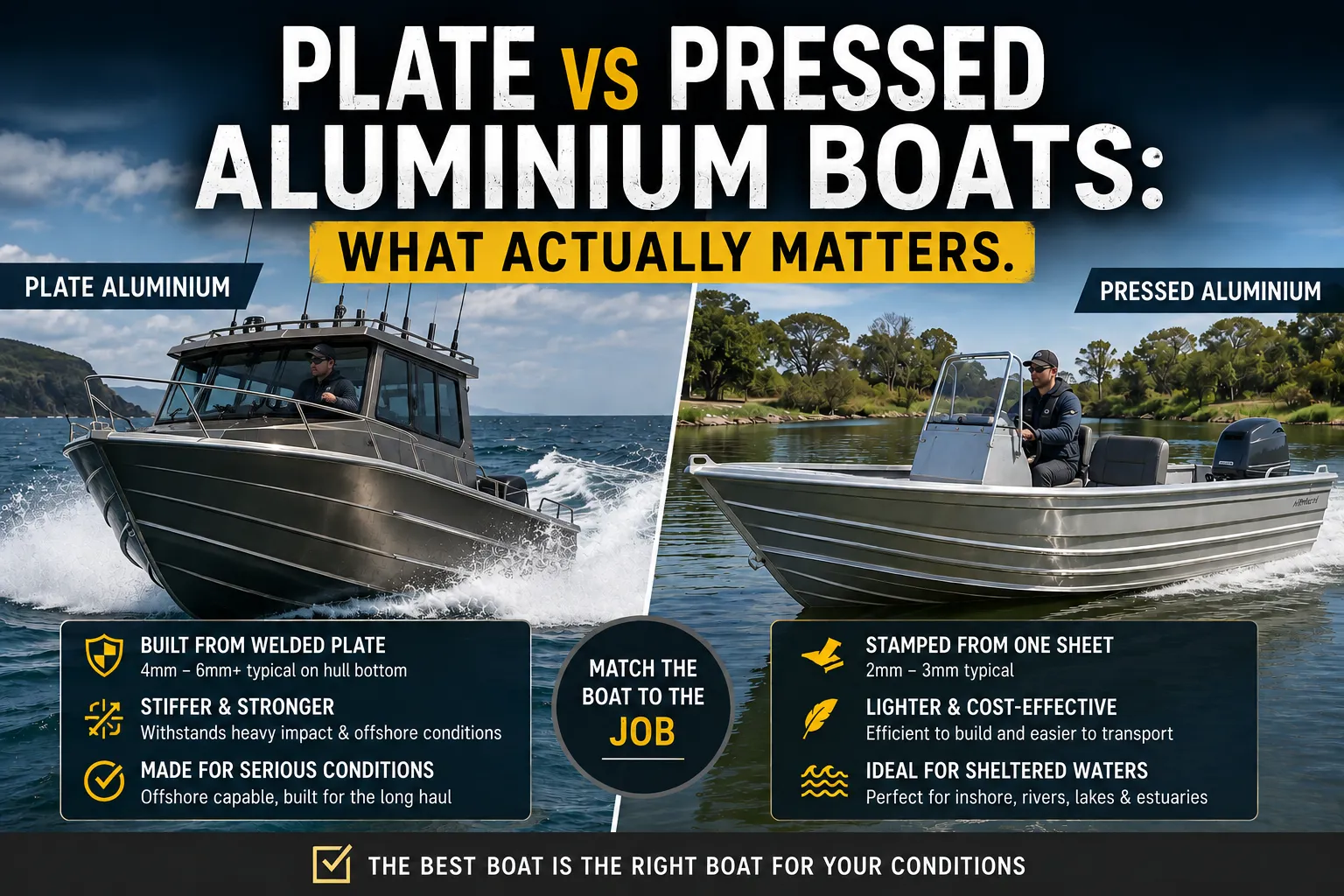
Every aluminium boat buyer runs into the same two words sooner or later: plate and pressed. They describe how the hull is built, and the difference shows up the moment you take a boat into anything rougher than flat water — not in the brochure photos.
What's Actually Different
A pressed aluminium hull is stamped from a single sheet of aluminium in one process, using a die to form the hull shape. It's efficient to manufacture, keeps material thickness relatively thin and consistent, and holds down both weight and cost. Most smaller tinnies, car-toppers and entry-level runabouts are pressed construction.
A plate aluminium hull is built from separate flat plates, cut to shape and welded together. That allows the builder to use thicker aluminium — commonly 4mm to 6mm or more on the hull bottom for serious offshore boats, versus 2mm to 3mm on a typical pressed hull — and to reinforce specific high-load areas independently, like the keel, chine and transom. It's a slower, more labour-intensive build, and it costs more.
Why It Matters on the Water
Thicker, welded plate construction is stiffer. A pressed hull will flex and drum under load and in chop in a way a plate hull generally won't, which affects both ride comfort and long-term fatigue resistance — repeated flexing is exactly the kind of stress that eventually shows up as hairline cracking around welds and high-load points on a lighter hull. That's a big part of why almost every serious offshore-capable aluminium boat, six metres and up, is plate construction rather than pressed: the hull needs to survive years of pounding through open water without fatiguing.
None of this makes pressed construction a bad choice — it makes it the right choice for a different job. A 4-metre tinnie that spends its life in a sheltered estuary doesn't need 6mm plate any more than a city car needs a truck chassis. Matching construction type to actual use, rather than buying more boat than the conditions call for, is the more useful question than "which is better."
What to Check When Buying
Manufacturer specifications will list hull and side material thickness — don't assume from the price bracket alone, since branding and fit-out can push a pressed boat's price close to an entry-level plate boat's. If you're buying used, look closely at weld lines and any repaired sections for early signs of fatigue cracking, particularly around the transom and chine on a boat that's been used offshore.